Brain

Pattern Recall: Sequence Memory Test

Watch. Remember. Repeat.

Ready to play
Music & volume
Your game audio

Start sound → Game music → Game-over sound. The start sound finishes before background music begins.

Background music is off.

This game’s soundtrack8 Bit 3

By Pudgyplatypus · CC0

Game setup & optionsModes, difficulty & style

Adjust options anytime. Changing rules or mode begins a fresh round.

How to play Pattern Recall

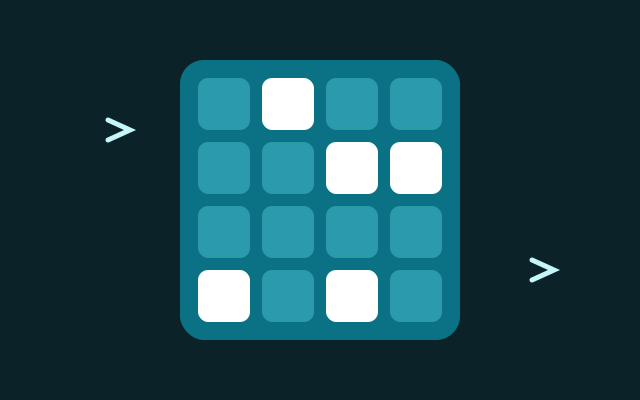
Press Start test. Tiles on a 3 × 3 board light up one after another. When the pattern ends, tap the same tiles in the same order. Each cleared level adds one more tile to the end of the same pattern. One wrong tile ends the test; your score is the number of levels you cleared. Choose a 4 × 4 board or a faster or more relaxed flash speed in Game setup. Tiles also work with Tab and Enter.

Strategy & tips

Turn the pattern into something you can say: a path ("top left, centre, bottom right"), a shape, or a short tune. Only the last tile is new each level, so focus on adding it to what you already know.

What is a sequence memory test?

A sequence memory test checks how long a pattern you can hold in mind and repeat in the right order. Tiles light up one at a time; when the pattern finishes, you tap the same tiles in the same order. Every time you succeed, the same pattern comes back with one extra tile added to the end.

It is the same idea behind the classic Simon toy and the Corsi block-tapping task used in psychology. Pattern Recall is a casual browser version: it is a fun way to compare your own sessions, not a medical or clinical assessment.

What is a good sequence memory score?

Scores vary a lot from person to person and from day to day. As a rough guide for the standard 3 × 3 board:

Levels clearedWhat it means
Under 5Warm-up. Try saying the path to yourself.
5 – 9Typical range for most players
10 – 12Above average focus and recall
13 – 19Excellent — often with a deliberate technique
20+Exceptional memory system

How to improve your sequence memory

  • Name the path: “top-left, middle, bottom-right” is easier to rehearse than a picture.
  • Chunk it: group the pattern into sets of three or four tiles.
  • Only the last tile is new each level — add it to what you already know instead of re-learning the whole pattern.
  • Try the 4 × 4 board once 3 × 3 feels easy; more positions make guessing harder.
  • Use Relaxed speed while learning, then switch to Fast for a real challenge.

Why sequence memory matters

Remembering a short sequence for a few seconds is part of working memory — the mental notepad you use to follow directions, remember a phone number while you dial it, or keep track of steps in a recipe. Practising pattern games is a light, enjoyable way to exercise that skill. Pair it with Tile Flash, which tests where things were rather than the order they appeared.
Questions, answered.

Rules, controls, and scoring details for a better round.

Still need help? Contact us ↗
What is a good sequence memory score?

On a 3 × 3 board many people clear around 6 to 9 levels. Reaching the low teens takes real focus, and 20+ usually means a deliberate memory technique.

Is Pattern Recall the same as the Human Benchmark sequence memory test?

It uses the same well-known task — a growing pattern on a 3 × 3 grid — but it is an independent ArcadeBreeze game with its own design, options and scoring. Scores from different sites are not directly comparable.

Does the pattern change every level?

No. Each level replays the whole pattern from the start and adds one new tile to the end, so you only need to learn one new step at a time.

What happens if I switch tabs during a pattern?

The test pauses. When you resume, the current level’s full pattern plays again so nothing is lost.

How is Pattern Recall scored?

Your score is the number of levels you cleared. Level 1 is a single tile; every level adds one tile to the same pattern. One wrong tile ends the test, and each grid size keeps its own best.

Can I play with a keyboard?

Yes. Use Tab to move between tiles and Enter or Space to press one. Tiles are locked while the pattern is playing.

Does Flash speed change the score?

No. Normal, Fast and Relaxed only change how long each tile stays lit. Pick Relaxed to learn and Fast for a harder run.

Do I need an account or a download?

No. Play directly in your browser. Favorites, preferences and the scores or progress supported by a game stay on this device. There is no online leaderboard or cloud save.

How do I control sound and appearance?

Use Sound beside the round controls to mute or enable audio. With music and effects enabled, the start sound plays first, followed by this game’s looping track, then one game-over sound when the round ends. Music & volume lets you choose music and effects independently; effects volume also controls start and game-over sounds. Audio starts off, pauses with the game or hidden tab, and restarts cleanly for a new round. Appearance settings stay in the header.

How can I report a bug or ask for help?

Open Contact in the navigation or footer and choose Help or Report a bug. Include the game name, your device/browser, the settings you used and what happened. You can also email contact@arcadebreeze.com.